


Bedridden Patients and the Importance of Anti-Bedsore Mattresses
When it comes to caring for bedridden patients, there are many specific details that caregivers must pay special attention to, more than with ordinary patients. This includes hygiene, nutrition, and even mental health, which requires careful monitoring. So, what precautions should be taken when caring for bedridden patients?
4 Precautions for Caring for Bedridden Patients
- Surrounding environment
In medicine and psychology, we often hear recommendations about living in a good environment. The environment surrounding the patient plays a vital role in psychological and physical recovery. A room with proper ventilation, cleanliness, and comfort helps the patient truly recover. Bedridden patients who cannot move like others may feel discouraged, delaying recovery. If the room is dirty or stuffy, it can clearly worsen health and negatively affect the caregiver’s mental well-being. Caregivers should boost the patient’s confidence and never make them feel like a burden. - Food and nutrition
Meals for bedridden patients must be chosen with care, as they are at high risk of choking. If choking occurs, food particles may enter the airway, causing lung infections or pneumonia, which in severe cases may be life-threatening. The best method is to adjust the hospital bed so that the patient sits upright, ensuring proper eating posture. Food should be easy to chew and digest. After eating, the patient should remain upright for a while to aid digestion before reclining again. - Hygiene
Some bedridden patients require catheters or tubes for excretion. For these patients, hygiene must be the top priority, as they are at higher risk of infections. Even spilled food on bedding can be a starting point for germs that may lead to complications. Key hygiene items to pay attention to include: bed sheets, pillows, blankets, commodes, and urinary catheter equipment—all of which must be cleaned and maintained properly. - Pressure ulcers
Underline this and highlight it—it is extremely important. Pressure ulcers are the main problem for bedridden patients. Prolonged lying causes skin over bony areas to be compressed, reducing blood circulation until the tissue dies. Common ulcer sites include heels, coccyx, and hips. If the patient develops ulcers, they are at even higher risk of infections. Thus, caregivers must pay special attention to this.
Understanding Pressure Ulcers: The Silent Threat for Bedridden Patients
As mentioned above, pressure ulcers are a critical issue. Let’s look at the risk factors. For bedridden patients, movement is limited. Prolonged immobility leads to pressure sores at bony prominences. Prevention includes regularly repositioning the patient to improve circulation or choosing mattresses designed for bedridden patients.
- Underlying conditions such as diabetes or vascular diseases
These conditions increase ulcer risk due to impaired wound healing. If a bedridden patient with diabetes develops pressure ulcers, complications can be severe. The best solution is prevention. - Maintaining skin balance is also important
Patients who are underweight, with thin or dehydrated skin, are prone to pressure ulcers since dry, fragile skin offers less cushioning at bony areas. Besides cleanliness and repositioning, maintaining skin moisture is key to prevention.
How to Recognize Pressure Ulcers in Bedridden Patients
Pressure ulcers are classified into 4 stages for easier identification and treatment. According to medical diagnosis, they result from reduced mobility and impaired blood circulation. Left untreated, pressure ulcers can destroy tissue severely.
Stage 1: Skin redness.
Stage 2: Red area becomes a shallow wound, not blistered.
Stage 3: Skin damage worsens; wound deepens to subcutaneous fat.
Stage 4: Full skin thickness loss with exposed bone.
As seen, pressure ulcers are more dangerous than most realize. Care for bedridden patients requires more than hygiene and environment—it must include proper support equipment. Today, innovations like anti-bedsore mattresses help, especially since a caregiver may not always be able to reposition heavier patients alone.
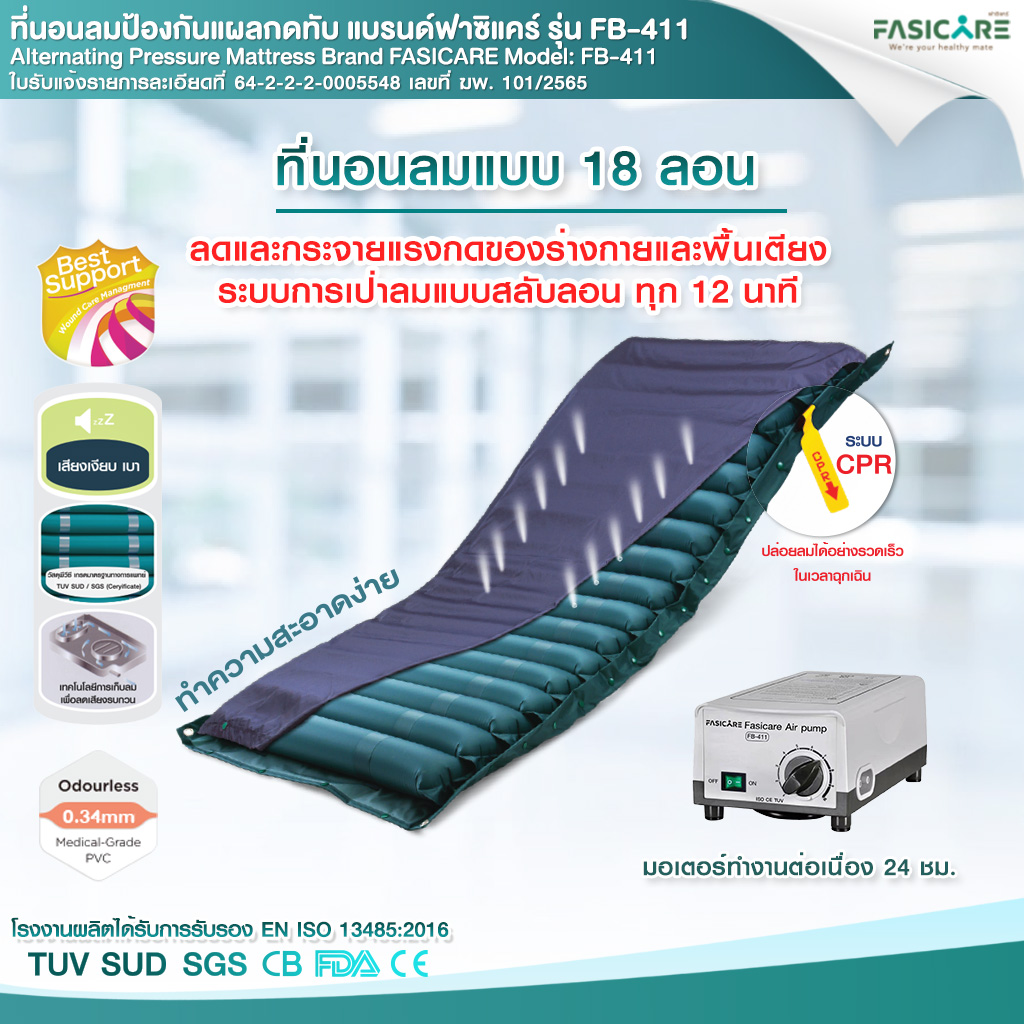
According to the Ministry of Public Health, air mattresses can be used as supplementary devices to reduce pressure. Fasicare also offers anti-bedsore mattresses for bedridden patients, including 3 options: honeycomb (bubble) type, 18-tube, and 22-tube models.
Example: Fasicare Honeycomb Air Mattress Model FB-412 with 1-year warranty
- Made with Japanese manufacturing technology to minimize seam leakage.
- Certified ISO 13485, SGS, FDA.
- Tested for safety and effective moisture ventilation.
- Supports up to 135 kg weight capacity.
Air mattresses suit many types of patients: stroke/paralysis, bedridden, or those with pressure ulcers at any stage. They are reliable aids and can be used as overlays on hospital or electric beds. Easy to use and portable with pump inflation. Fasicare products meet ISO 13485 standards, export-grade for Europe and the US, at affordable prices—with showroom trials and fast delivery services.
If you are looking for an air mattress, electric hospital beds, wheelchairs, or other equipment, contact our specialists below. We guarantee professional service backed by over 10 years of experience.