


A mattress for bedbound patients is one of the essential devices that can effectively prevent pressure ulcers. It helps patients with mobility limitations who must lie in bed for extended periods—such as bedbound patients, older adults, or those who have recently undergone major surgery—avoid risks associated with pressure ulcers, particularly limb amputation and infections that may lead to death. Today, we will introduce mattresses for bedbound patients—equipment that helps care appropriately for bedbound patients—along with a detailed explanation of their importance, how to choose the right one, and care methods to maximize the mattress’s lifespan and performance.


What is a Mattress for Bedbound Patients?
A mattress for bedbound patients is specifically designed to genuinely reduce the occurrence of pressure ulcers. It is suitable for older adults or patients with existing pressure ulcers. Effectiveness depends on the mattress type and quality as well as correct usage.
Why Mattresses for Bedbound Patients Matter
The importance of such mattresses is closely tied to caring for patients with limited mobility who must lie in bed for long periods. Key aspects include the following:
- Preventing and reducing the risk of pressure ulcers
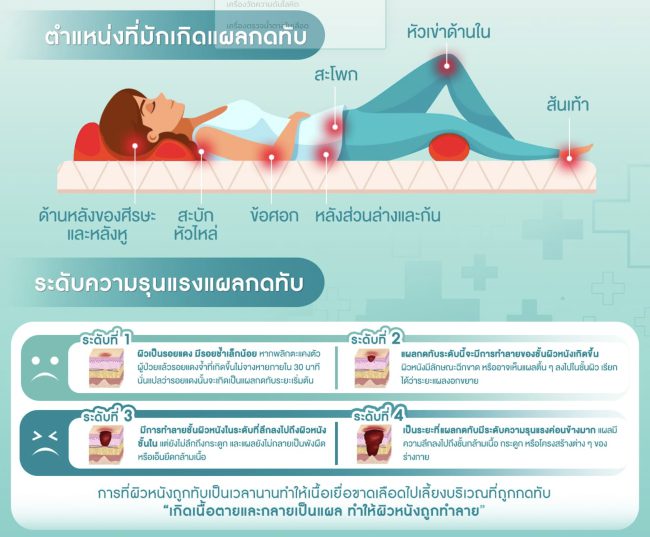
Pressure ulcers are caused by prolonged pressure on a small area of skin, restricting blood flow and leading to tissue necrosis. Mattresses for bedbound patients are designed to redistribute pressure, lowering the risk of pressure ulcers and improving comfort.
- Improving comfort and quality of life
A good bed and mattress reduce pain and discomfort associated with long-term bed rest, thereby improving quality of life.
- Making patient care easier
These mattresses make caregiving easier by reducing the caregiver’s burden of frequent repositioning and lowering the risk of pressure ulcers—resulting in more effective and safer care.
- Supporting recovery
Comfortable, safe sleep supports recovery through adequate rest, which benefits healing and reduces complications associated with prolonged bed rest.
- Lowering healthcare costs
Preventing pressure ulcers and providing efficient care helps reduce long-term treatment costs. A quality mattress for bedbound patients can lower expenses related to treating pressure ulcers and other complications.
Key Characteristics of Mattresses for Bedbound Patients
These mattresses are tailored for patients who must remain in bed for extended periods. Important characteristics that help prevent pressure ulcers and enhance comfort include:
- Weight distribution
They are designed to distribute body weight evenly, reducing concentrated pressure on small skin areas—the main cause of pressure ulcers.
- Materials used
Materials play a crucial role in pressure redistribution and comfort, such as:
- Foam: High-quality foams like memory foam contour to body shape and distribute weight effectively.
- Gel: Gel helps distribute pressure and reduce heat buildup during prolonged lying.
- Air: Air mattresses feature adjustable pressure systems to redistribute load and reduce pressure on the skin.
- Ventilation
Some models incorporate ventilation systems to reduce moisture and heat from long-term lying, helping lower the risk of pressure ulcers and infection.
- Posture/position changes
Certain models provide automatic repositioning—for example, alternating-pressure air mattresses that vary air pressure in different zones to shift load points and reduce sustained pressure.
- Cleaning and maintenance
They should be designed for easy cleaning and maintenance. Materials should withstand frequent use and cleaning to keep the mattress in good condition and prevent microbial build-up.
- Flexibility
The mattress should flexibly adapt to the patient’s body shape and movement to provide proper support and minimize pressure throughout the body.
Benefits of Using Mattresses for Bedbound Patients
Key benefits include:
- Prevention of pressure ulcers through designs that redistribute weight and specifically reduce ulcer risk.
- Enhanced comfort with better body support, plus reduced heat and moisture during sleep.
- Improved sleep quality—deeper, more restorative sleep with fewer nocturnal awakenings.
- Support for bodily recovery by improving blood circulation and enabling restful nights.
- Reduced caregiver burden—less frequent repositioning; easy to clean and durable.
- Increased safety—lower risk of accidents such as falls or sliding during sleep.
- Lower long-term care costs by preventing pressure ulcers.
Types of Mattresses for Bedbound Patients
There are several types, each with distinct features and advantages. Selection depends on the patient’s needs and condition.
- Air mattresses (Alternating Pressure Mattresses) in two types:
cross-tube style that effectively handles pressure and reduces prolonged contact points, and
honeycomb/bubble style that alternates inflation/deflation. - Foam mattresses in two styles:
flat slab and castellated/contoured. These provide good weight support and pressure redistribution, suitable for bedbound patients and those with early-stage pressure ulcers.
How to Choose a Mattress for Bedbound Patients
Choosing the right mattress is crucial because it directly impacts patient comfort and health.
- Mattress type
◦ Alternating Pressure Mattresses: For patients at high risk of pressure ulcers.
◦ Foam Mattresses: For those requiring comfort and good support.
◦ Gel Mattresses: For patients who need heat dissipation and pressure reduction. - Size and suitability
◦ Mattress size: Match the mattress size to the bed and patient; it should fit properly.
◦ Thickness: Choose adequate thickness for weight support and comfort. - Ease of use
◦ Repositioning: Consider mattresses that allow easy posture changes, e.g., adjustable-pressure air mattresses.
◦ Cleaning: Choose models that are easy to clean to maintain hygiene and reduce infection risk. - Budget
◦ Price: Balance quality with budget.
◦ Warranty: Check warranty terms for quality assurance and after-sales service. - Testing and reviews
◦ Trial: If possible, test-lie to assess comfort and support.
◦ Reviews: Read user reviews of the specific model before deciding. - Professional advice
◦ Consult clinicians or specialists: Seek guidance from healthcare professionals for the most suitable choice.
Key Features to Consider
- Weight redistribution to minimize pressure on contact areas as much as possible.
- Comfort and support with appropriate firmness/softness tailored to patient needs.
- Adjustable firmness: internal air cells (for air models) should be easily adjustable to meet personal preferences and medical requirements, ensuring personalized comfort and support.
- Improved airflow: the Oasis Tri-Cell air mattress features a unique air-circulation system that promotes optimal airflow, regulates body temperature, and prevents moisture build-up—keeping users cool, dry, and comfortable throughout the night.
- Easy-to-use controls: enable straightforward adjustments of air pressure and firmness, providing the best experience for users and caregivers.
Durable and easy to maintain: built with high-quality materials for long-lasting daily use. These mattresses are designed for convenient upkeep with comprehensive features.
11 Reasons Customers Trust and Choose Fasicare’s Mattresses for Bedbound Patients
Here are the 11 reasons customers place their trust in Fasicare’s mattresses:
- Showroom available to try products before purchasing; ample parking; prime roadside location with easy access.
- Medical device standards certified: ISO 13485, IEC, CE.
- Expert team trained by manufacturers providing professional advice.
- 100% product inspection before delivery.
- Warehouse facilities meet international standards.
- Express delivery within 3 hours, including installation and user training.
- International-standard management: ISO 9001.
- Product warranties—up to lifetime coverage.
- After-sales support with onsite service.
- Immediate replacement for manufacturing defects.
- Medical equipment rental services to expand customer options.
How to Care for Mattresses for Bedbound Patients to Prolong Their Lifespan
Simple steps include:
- Clean regularly: launder covers and sheets; wipe surfaces per manufacturer guidance; vacuum to prevent dust and microbial build-up.
- Prevent moisture: ventilate the room or use fans; use waterproof protectors to prevent spills.
- Rotate and flip regularly (every 3–6 months) to prevent sagging in high-load zones; rotate 180 degrees for even wear.
- Inspect condition: check for tears or damage and repair/replace immediately; promptly clean any soiling.
- Maintain the air pump (for air mattresses): ensure optimal pump performance and clean pumps and air hoses to prevent dust accumulation.
- Protect from sunlight and heat: avoid direct sun/high heat that can degrade materials; use covers or pads as needed.
- Follow manufacturer instructions for care and use only recommended cleaning agents to preserve quality.
FAQ
What types of mattresses for bedbound patients are available?
- Alternating Pressure Mattresses
◦ Use a pump to alternately inflate/deflate internal air cells to redistribute pressure and reduce pressure points. Two styles are available: tube (cross-lane) and honeycomb/bubble.
◦ Advantages: Highly effective at reducing the risk of pressure ulcers; ideal for high-risk patients. - Foam Mattresses
◦ Made from foams of varying densities and resiliencies to distribute weight and lower pressure.
◦ Advantages: Comfortable with good body support and typically more affordable than air mattresses.
Why is choosing the right mattress so important?
Because the mattress directly affects health and quality of life, as well as caregiving effectiveness—preventing pressure ulcers, enhancing comfort and sleep, reducing pain, supporting health and infection prevention, improving the quality of life for both patients and caregivers, and increasing safety by lowering accident risks.
How do air mattresses help bedbound patients?
Air mattresses feature adjustable pressure to redistribute load and reduce skin pressure, preventing ulcers in high-risk patients. They also promote proper airflow to regulate body temperature and prevent moisture accumulation, keeping users comfortable all night.
How should these mattresses be maintained?
Clean the mattress regularly, avoid heat and direct sunlight, prevent moisture, flip/rotate to prevent sagging, and repair/replace promptly if damaged to ensure user safety.